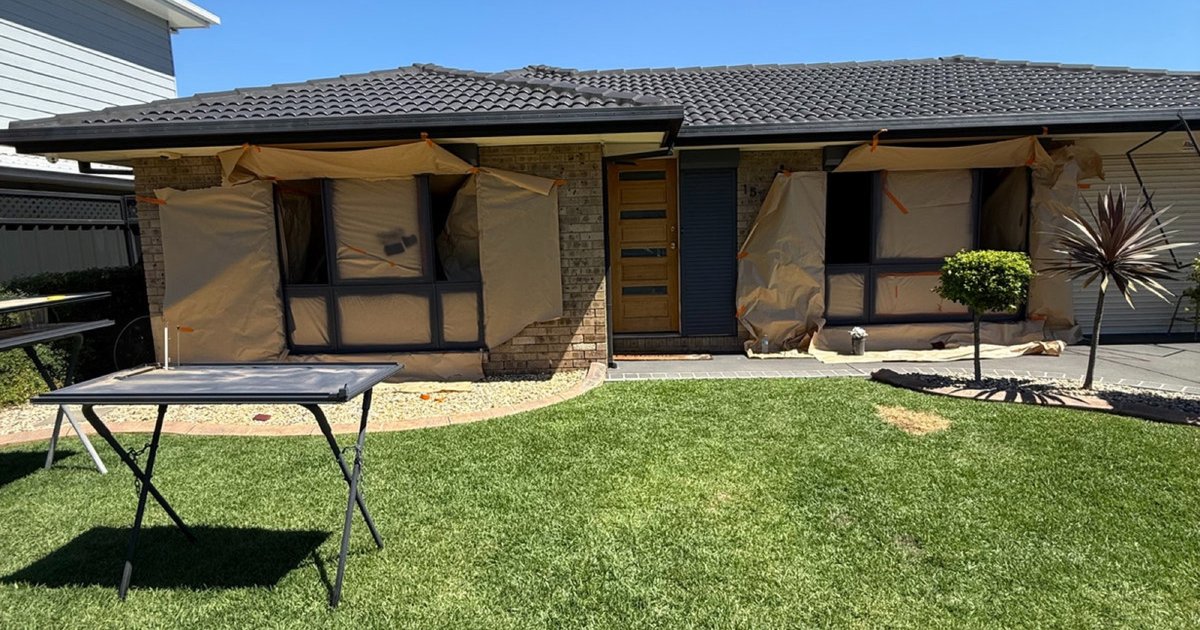
What actually stays installed?
The frame fixed into the wall is the starting point. Respraying changes its exposed finish rather than replacing the opening. It does not require the same removal work as fitting a new window assembly. Whether individual screens or other accessible components need attention is a separate scope decision, not a reason to assume every part comes out.
An installed window is more than an aluminium outline. Glass, seals, handles, tracks and drainage openings each have a purpose. Identify these before coating begins. A homeowner may use the word window to mean the complete assembly, while a painting scope refers to selected metal surfaces. Naming those surfaces avoids surprises at the handback.
How are glass and neighbouring surfaces protected?
Masking separates the metal being painted from glass and nearby finishes. The crew needs room to protect sills, walls and other surfaces beside the opening. Protection is planned around the actual window, including corners where aluminium meets another material. The boundary should be clear before cleaning, preparation or spraying starts.
Tell the crew about delicate wall coverings, recently finished joinery and surfaces you do not want disturbed. Do not apply your own tape over the frames in anticipation of work. The protection needs to suit the preparation and coating scope. Clear photographs of the full opening help explain these details before an onsite assessment.
Will every surface of the opening be painted?
Not necessarily. The agreed scope may include outside faces, inside faces or both. Opening a sash can reveal edges that are hidden when it is shut, so inspect the window in different positions. Decide whether these visible returns should match the new finish rather than assuming the closed view tells the whole story.
Glass and flexible seals are not frame coating surfaces. Hardware, screens and tracks also need explicit decisions about protection or exclusion. A painted frame does not repair a loose handle or a sash that catches. Explain existing operating problems early so they are not mistaken for finish defects after the work.
Can you remain at home while the work is planned?
Living in the home makes access planning important. Discuss which rooms contain the openings and how people normally move through them. Work areas need to be kept separate from household activity while preparation and coating take place. The arrangement depends on the property and the scope; do not assume a room remains available throughout.
Plan for children, pets, curtains and furniture near the windows. Keep a usable route through the home that does not pass through a protected work area. Raise security, ventilation and entry requirements with the crew. Agree on these practical details rather than relying on a general promise that the household will be unaffected.
What does leaving the frames in place not solve?
Coating is not a substitute for a sound window. Frames that are damaged, loose or affected by significant corrosion need assessment before a finish is chosen. Broken glass, failed seals and operating faults remain separate issues. If an opening leaks, identify the cause rather than expecting paint to make the assembly weatherproof.
Also check whether the surfaces can actually be reached for preparation. Obstructions, enclosed corners and access outside the building can alter the scope. Keeping a frame installed does not mean every edge is accessible. Ask which surfaces can be prepared properly and which limitations should be recorded before approving the work.
What should you send with an enquiry?
Provide a wide view of each elevation and closer views of the frames. Include an open-window photograph if the inside edges matter to the colour change. Show nearby furnishings or external obstacles as well as the metal itself. The aim is to explain the opening and its access, not just the colour you dislike.
List whether you want interior faces, exterior faces or both and note any existing damage. Confirm how screens and household access will be handled. For advice about using the windows after coating, follow the crew’s instructions and the related care guide rather than treating a dry-looking surface as ready for normal contact.
Common questions
Does onsite respraying mean the glass comes out?
Not as a standard assumption. The installed frame can be coated with glass protected by masking. Any removal requirement must be discussed for the actual assembly.
Should I take screens out before the crew arrives?
Ask first. Confirm which screens affect access and how they will be handled, rather than removing parts without an agreed plan.
Will paint fix a window that sticks?
No. An operating fault needs assessment separately from a change to the exposed metal finish. Describe it before the coating scope is agreed.
Can I leave furniture beside the opening?
Discuss clearance with the crew. Preparation and protection need access around the frame, so nearby furnishings may need to be moved.