Yes, if the existing windows are suitable
Aluminium windows can often be painted while they remain installed. The important question is not whether aluminium accepts paint, but whether the existing surface is sound and can be prepared for a compatible coating system. An assessment should consider the original finish, previous paint, corrosion and access. Sound frames with dated colour are a different proposition from frames with significant deterioration or water-entry problems.
Painting changes the finish, not the underlying window design. It will not straighten a distorted frame, restore failed glazing or make defective hardware reliable. Have those issues assessed before choosing a colour. Some screens or removable fittings may need to come off for access, but that does not necessarily mean removing the window assembly from the building or disturbing the surrounding wall.
What onsite electrostatic painting actually means
Onsite electrostatic painting uses charged liquid paint applied towards suitably earthed metal. The electrical attraction helps draw the coating towards the frame, including shaped surfaces. It is not dry powder being baked onto your installed windows. The liquid system is selected for the substrate and site conditions, with controlled application and curing carried out according to the coating manufacturer’s requirements.
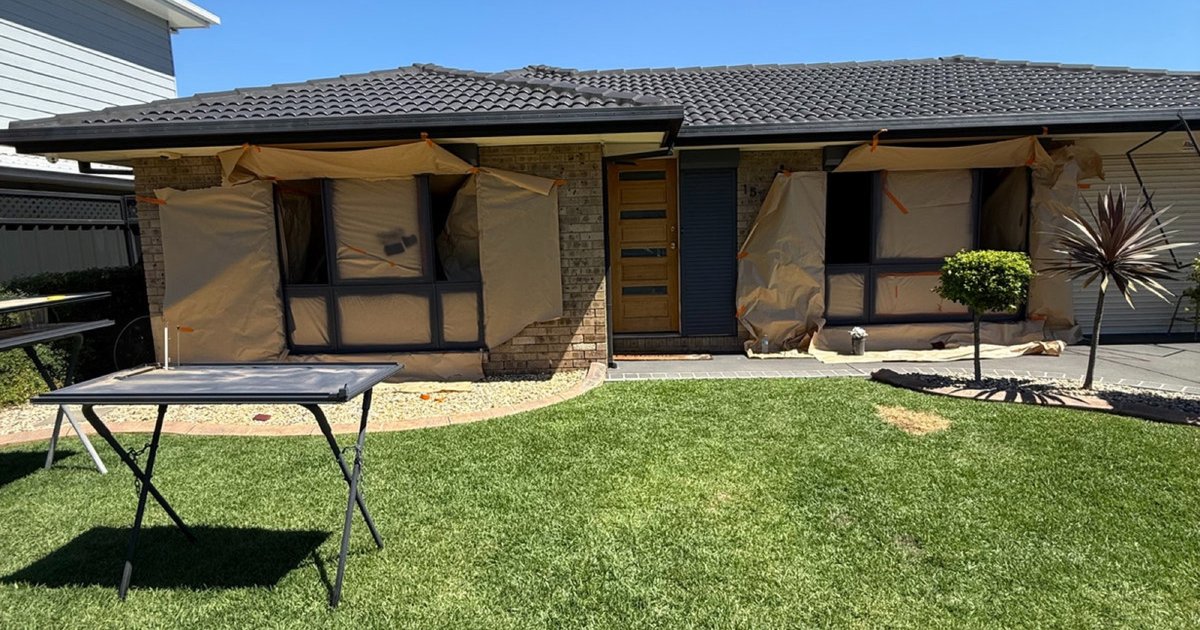
The attraction does not make masking unnecessary or eliminate every risk of overspray. Glazing, walls, floors and adjacent items still need protection, and ventilation and exclusion areas must be planned. Electrical setup and application belong with trained operators. Ask the contractor how they will manage the occupied property, protect nearby finishes and keep people and pets away until the area can safely be used.
Clean thoroughly before preparing the surface
Cleaning removes the contamination that would otherwise sit between the frame and its new finish. Dirt, grease, salt deposits and residues from household cleaners can all interfere with adhesion. Silicone contamination around building joints needs particular care because it can cause coating defects. Simply wiping a dusty frame and painting over it is not a reliable preparation method, even when the topcoat is expensive.
Once clean, the surface is assessed and prepared to remove loose material and create the profile the chosen system needs. Glossy factory coatings usually require controlled abrasion; damaged areas may need feathering and local treatment. Dust and preparation residues must then be removed. Sound existing coating can sometimes remain, but uncertain previous finishes should be checked for adhesion and compatibility rather than treated as a dependable base.
Mask carefully and choose a compatible primer
Masking defines where paint stops and protects the parts that must continue to function. Glass, rubber seals, locks, rollers, tracks and drainage openings need careful attention. Painting over moving components or blocking weep holes can create problems despite an attractive appearance. The scope should identify visible frame faces and opening edges so there is no confusion about what will be coated or intentionally left alone.
For our aluminium respray sequence, we use a compatible epoxy etch primer specified for the prepared substrate and retained coating. Product terminology is not a substitute for checking the actual formulation: the primer must suit exposed aluminium, existing coating and the specified topcoat. Follow the manufacturer’s preparation, application and recoating directions. The aim is a reliable bond across prepared surfaces, not a generic primer layer applied regardless of what is underneath.
Apply two colour coats, then demask
After the specified primer stage, the planned colour application is 2 colour coats. Each coat must be applied within the selected system’s conditions and recoating requirements, with the intended coverage and film build. Two colour coats describe the application sequence, not permission to ignore the manufacturer’s specification. Strong colour changes or specialised finishes may require additional work, which should be discussed before the job is booked.
Once the finish is ready for the appropriate handling stage, the protection is carefully demasked and the work inspected. Check edges, visible faces and the operation of any components that were protected or temporarily removed. A coating can feel dry before it is fully cured, so follow the handover instructions for opening, cleaning and contact. Do not rush to scrub marks or attach tape to fresh paint.
Why DIY brushing and aerosols can disappoint
DIY painting is not impossible, but aluminium is unforgiving when preparation or product compatibility is wrong. Brushing can leave visible texture and heavy edges around detailed profiles. Aerosol application can be difficult to control across an installed assembly, especially around glass and seals. Poor adhesion commonly starts with contamination, inadequate abrasion or an unsuitable primer rather than the fact that the frame is aluminium.
Professional application also involves containment, access and exposure controls that a small can of paint does not provide. Some coating products present serious inhalation hazards and require specialist equipment and training. If considering DIY, read the full product safety and technical information and be realistic about access and protection. Avoid treating a small successful test patch as proof that every existing surface will behave the same way.
Set up the project for a clean result
Before work, confirm the colour, sheen and exact faces being painted. Make space around the windows, discuss curtains and blinds, and arrange safe access to external areas. Let the contractor know about recent silicone work, previous repainting and any cleaners or protective treatments used on the frames. Those details can affect preparation and help explain why an apparently tidy surface needs more attention. Ask for a clear handover checklist covering the surfaces completed, any limitations identified during preparation and the care needed while the coating cures. Keeping these details with your colour approval makes future cleaning, repairs and matching easier to manage without guesswork.
Use the window respraying service for a whole-frame colour refresh, or discuss powder coat repair when the main issue is local damage to an existing finish. A spot repair and a complete colour change have different visual expectations. Send overall photographs and close-ups so the contractor can advise on a suitable scope, then obtain written preparation, coating and aftercare details before proceeding.
Common questions
Do the windows need to come out?
Often they can remain installed, subject to condition and safe access. Some fittings or screens may be removed for preparation. The contractor should explain any dismantling and protect the window’s working parts.
Is electrostatic painting the same as powder coating?
No. The onsite process uses charged liquid paint. Factory powder coating uses dry powder and an oven-curing process, so it is not simply reapplied to a window while it remains in the wall.
Can the new paint peel?
Yes, if the underlying coating is unstable or preparation and compatibility are inadequate. Proper cleaning, assessment, abrasion and the specified primer system help establish adhesion, but cannot compensate for an unsound substrate.
Can I paint the frames with a brush?
It is possible with an appropriate system and careful preparation, but brush marks and difficult access can limit the finish. DIY aerosols also need proper protection and safety controls; neither method bypasses adhesion requirements.