What can a brush finish reasonably achieve?
A brush can apply a compatible coating to an accessible surface, but the appearance depends on the product, technique and shape of the frame. Narrow profiles and corners can make a consistent film difficult to achieve. A finish that looks acceptable on a small sample may read differently across a group of windows in changing light.
Consider whether visible brush texture suits your expectations. Raking light can emphasise marks that are less apparent straight on. Painting around glass and hardware also calls for a deliberate boundary. A brush is an application tool, not a substitute for cleaning or preparation, and a neat topcoat does not prove that the underlying coating is sound.
What makes aerosol work harder than it looks?
An aerosol may appear convenient for a small area, but controlling coverage around an installed opening requires care. Nearby glass, walls and furnishings still need protection. Changing the angle around corners can produce an uneven appearance. Test work on a suitable sample does not remove the need to understand the actual frame and its existing finish.
Pay attention to the product’s instructions, compatibility and safety requirements rather than selecting by colour alone. Do not assume a spray can recreates an onsite electrostatic application method. The equipment and way paint is applied differ. A successful small touch-up is also not evidence that you can manage a complete facade with the same approach.
Why does preparation matter whichever method you choose?
Dirt, chalking and loose coating need assessment before new paint is applied. The base may be powder coated, anodised or previously painted, with different histories and defects. A smooth-looking surface can still be unsuitable to coat without appropriate preparation. Identify what is there rather than choosing a primer solely because the frame is aluminium.
Electrocoat’s onsite process includes cleaning, keying or preparation, masking, epoxy etch primer and two colour coats. That process should not be treated as a generic recipe for every DIY product. A coating system has its own requirements. If you cannot identify the existing finish or assess adhesion concerns, seek an assessment before adding another layer.
How should you compare the finished appearance?
Compare colour, sheen, edges and consistency on the actual profiles. Looking at a flat colour card alone overlooks how frames catch light. A professional spray finish and a hand-applied finish can have different visual characteristics. Decide what matters to you without assuming either method will hide dents, corrosion or an uneven existing base.
Use a representative opening to think through the result, including the parts seen when it opens. Set realistic expectations for adjoining doors and screens. If an exact visual match to an existing surface matters, assess a physical sample. Colour agreement does not automatically mean identical texture or reflection across different materials and application methods.
When is professional assessment the more practical choice?
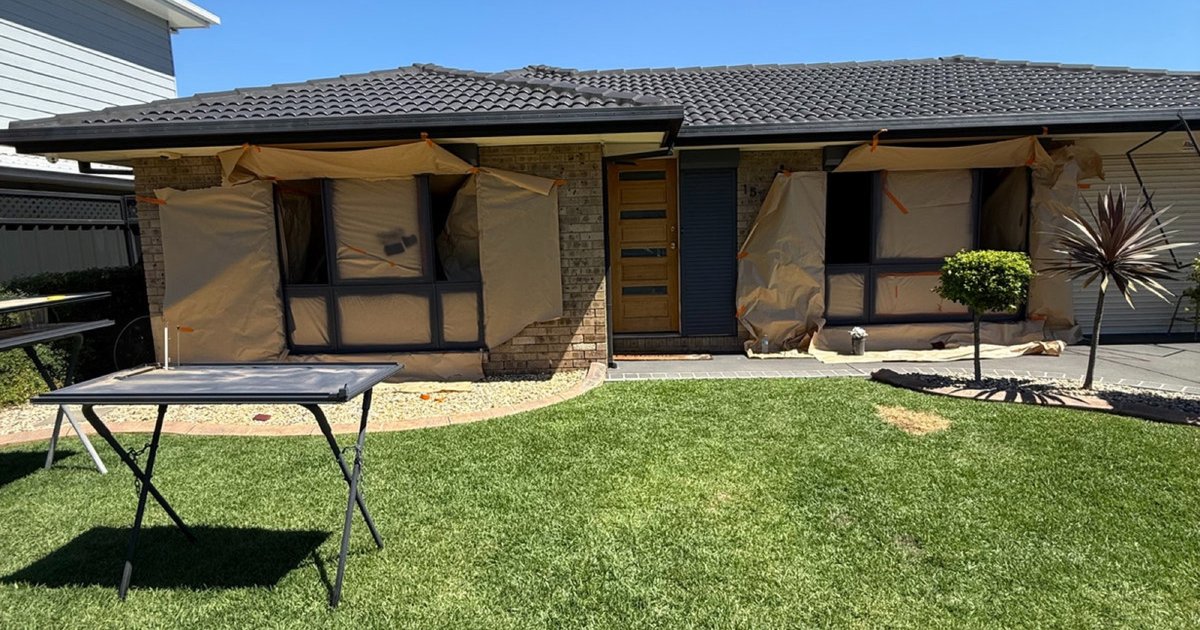
Consider assessment where many openings need a consistent finish, access is awkward or the existing coating is failing. Managing the preparation and protection across occupied rooms is different from working on a detached sample. Areas above ground level or beside sensitive surfaces need planning rather than improvised access. Describe those conditions with photographs.
Professional application is not a cure for an unsound window. Mechanical faults, broken glass and worn seals still need separate attention. The value of assessment is identifying a suitable coating scope and its limitations, not simply choosing someone else to spray. Ask what can be prepared properly and which repairs should happen before the finish work.
What questions help you make the decision?
Ask whether you understand the substrate, can protect the surrounding area and can safely reach all selected surfaces. Consider the finish standard you expect and whether a partial colour change will leave visible boundaries. Avoid starting on the most prominent opening before you have tested the intended system and understood its instructions.
If you have already tried painting, tell the crew which materials you used and show the result. An additional coating does not erase the history of the base. Keep labels or product details where available. Whether you proceed yourself or seek professional help, make the condition, included surfaces and care requirements the centre of the decision.
Common questions
Will aerosol paint look like electrostatic respraying?
Do not assume the same appearance. Application equipment, technique, preparation and the frame profile influence the result.
Can new paint hide flaking powder coat?
Covering loose material is not a sound preparation plan. The cause and condition of the existing coating need assessment before recoating.
Should I choose DIY paint just by its colour?
No. Check the intended substrate, compatible preparation and product instructions as well as a physical colour and finish sample.
Can a professional coat over my previous DIY attempt?
That depends on the existing finish and its condition. Provide product information and photographs so compatibility and preparation can be assessed.