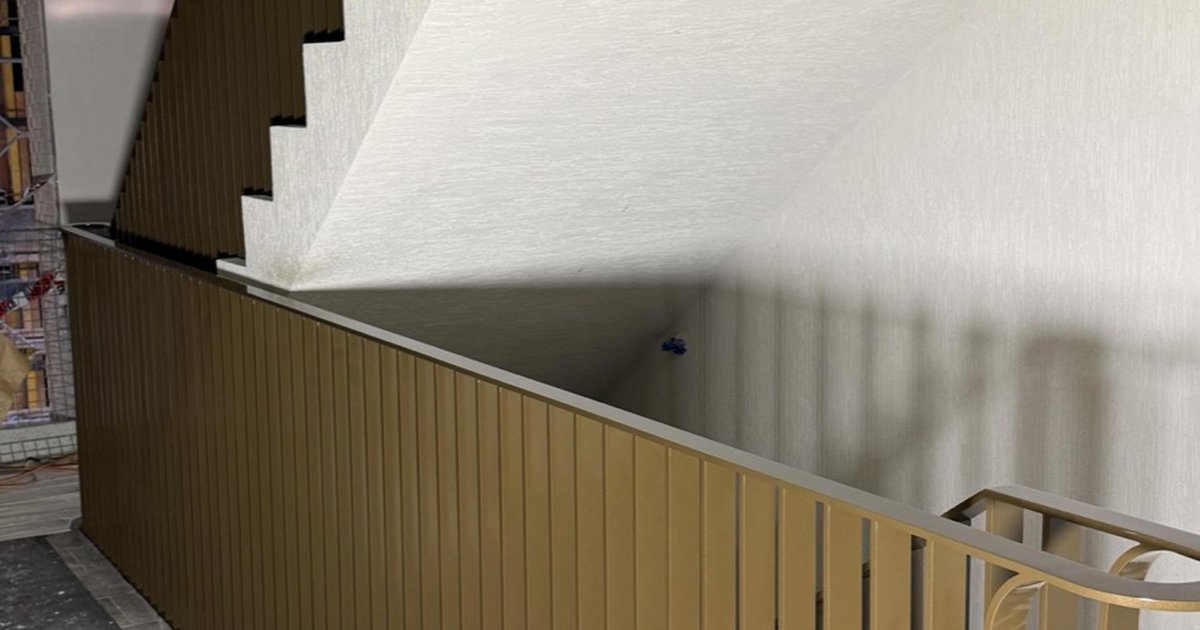
How charged liquid paint reaches the metal
Electrostatic painting is a liquid spray process. Suitable equipment gives atomised paint droplets an electrical charge, while the metal being coated is connected to earth. The electrical attraction helps direct the droplets towards the workpiece. This is different from simply relying on the spray stream to carry paint onto a surface.
The paint remains a coating system with its own requirements for mixing, application, drying and curing. Electrostatic attraction does not replace adhesion chemistry. The substrate, any existing coating, preparation method and primer must still be compatible with the selected finish. A successful specification considers the complete system rather than choosing equipment alone.
For onsite work, this service is for metal substrates such as suitable aluminium and steel components. A painted metal frame may need particular attention to achieve effective earthing. Glass, timber, masonry and plastic next to it are not included just because they sit within the same assembly.
What wrap-around can and cannot do
Charged droplets can be attracted around exposed edges and curved sections, helping coat railings, frames and other metal profiles. This behaviour is often described as wrap-around. It can improve access to surfaces that are awkward with an ordinary spray pattern, but it is not a promise of complete hidden coverage.
Deep recesses, closely spaced components, enclosed channels and screened faces can be difficult to coat evenly. Geometry and the electrical field influence where droplets land. The applicator still needs appropriate access, controlled gun positioning and checks of edges, returns and shadowed areas. A visible front face is not evidence that every concealed surface is protected.
Ask how the proposed method deals with undersides, joints and narrow gaps. Some areas may require a different application approach or may be excluded where access is impossible. These limitations belong in the scope before work starts, particularly where corrosion protection depends on continuous coating coverage.
Understanding the transfer-efficiency claim
We use a Kremlin electrostatic system with around 90% transfer efficiency under suitable conditions. Treat that figure as qualified equipment performance, not a guaranteed result for every site, coating or component. Transfer efficiency describes the proportion of sprayed material deposited on the intended workpiece; it does not measure coating adhesion or overall job quality.
The actual result depends on earthing, coating properties, settings, operator technique, component shape and the surrounding conditions. Installed metalwork is rarely identical to a controlled demonstration. Ask which equipment and coating combination is proposed, and avoid using a headline efficiency figure as a substitute for an application method or inspection plan.
Electrostatic attraction can reduce overspray compared with conventional spraying in suitable applications. Less overspray does not mean no overspray. Nearby vehicles, glazing, paving and neighbouring property still require assessment and protection. The process should never be presented as a reason to dispense with containment, masking or careful site organisation.
Preparation decides whether the coating can adhere
Inspection should identify the metal, the condition of the existing finish and any corrosion, contamination or previous repairs. Loose coating, chalking and unsuitable residues cannot simply be covered over. Preparation may include cleaning, removal of unsound material, surface abrasion and a compatible primer, as specified for the actual substrate and coating.
Existing finishes need a compatibility assessment. A sound-looking powder coat can still have local adhesion problems, while damaged areas may expose a different underlying surface. Where appropriate, agree a trial area and assessment method before committing to the full respray. Do not assume the new coating will stabilise a failing layer underneath.
An onsite liquid respray is not the same process as factory powder coating. Powder coating generally involves dry powder and controlled heat curing. Installed assemblies may make removal and factory treatment impractical. The sensible comparison considers access, preparation, the chosen finish and the disruption involved, rather than claiming the processes are interchangeable.
Safety, masking and practical access
The contractor should assess electrical earthing, ignition hazards, ventilation and exposure risks against the equipment instructions and coating safety information. Electrostatic equipment and coating materials require competent handling. The project method must reflect the actual work area, including any occupied spaces or activities that could introduce an ignition source.
Masking should protect glass, seals, tracks, hardware, adjacent finishes and anything that must remain uncoated. Moving parts and drainage openings need particular attention. Agree who relocates furniture, protects vehicles and controls public access. On occupied sites, residents and other trades need clear instructions about exclusion areas and when access can resume.
Access equipment, weather exposure and the ability to isolate a work zone may affect suitability. A safe system also considers preparation dust, cleaning products and waste, not only spraying. If the site cannot support the necessary controls, the application method or sequence needs to change rather than relying on reduced overspray.
What to request before approving the work
Ask for a written scope identifying included components, substrate preparation, coating system, colour and gloss, access arrangements and exclusions. Include a sample approval process where appearance is important. Specify how repairs, difficult edges and existing coating failures will be addressed, and who signs off the completed work.
Request product-specific care instructions and the written warranty terms. Confirm what is covered, what maintenance is required and how a concern should be reported. For a broader explanation, use our process page and service overview alongside the component-specific scope.
Common questions
Does electrostatic painting work on any surface?
For this onsite service, the substrate must be suitable metal and capable of effective earthing. Adjacent glass, plastic, timber and masonry are not treated as metalwork. An existing coating also needs assessment, because its condition can affect both preparation and the application method.
Does the paint reach every hidden edge?
No. Wrap-around assists coverage around accessible profiles, but recessed or screened surfaces can remain difficult. Ask the applicator to identify inaccessible faces and explain how coverage will be checked. Any excluded surfaces should be clear before you approve the scope.
Is around 90% transfer efficiency guaranteed?
No. The Kremlin figure is a qualified performance reference under suitable conditions. Actual transfer efficiency varies with the equipment setup, paint, component geometry, earthing and application technique. It is not a guarantee of site cleanliness, adhesion or complete coverage.
Can the area stay occupied during spraying?
That depends on the site assessment and controls, not simply the application technology. The contractor must establish suitable separation, ventilation and access restrictions. Occupants should follow the agreed notices and instructions, including restrictions during preparation and while the coating becomes ready for use.